
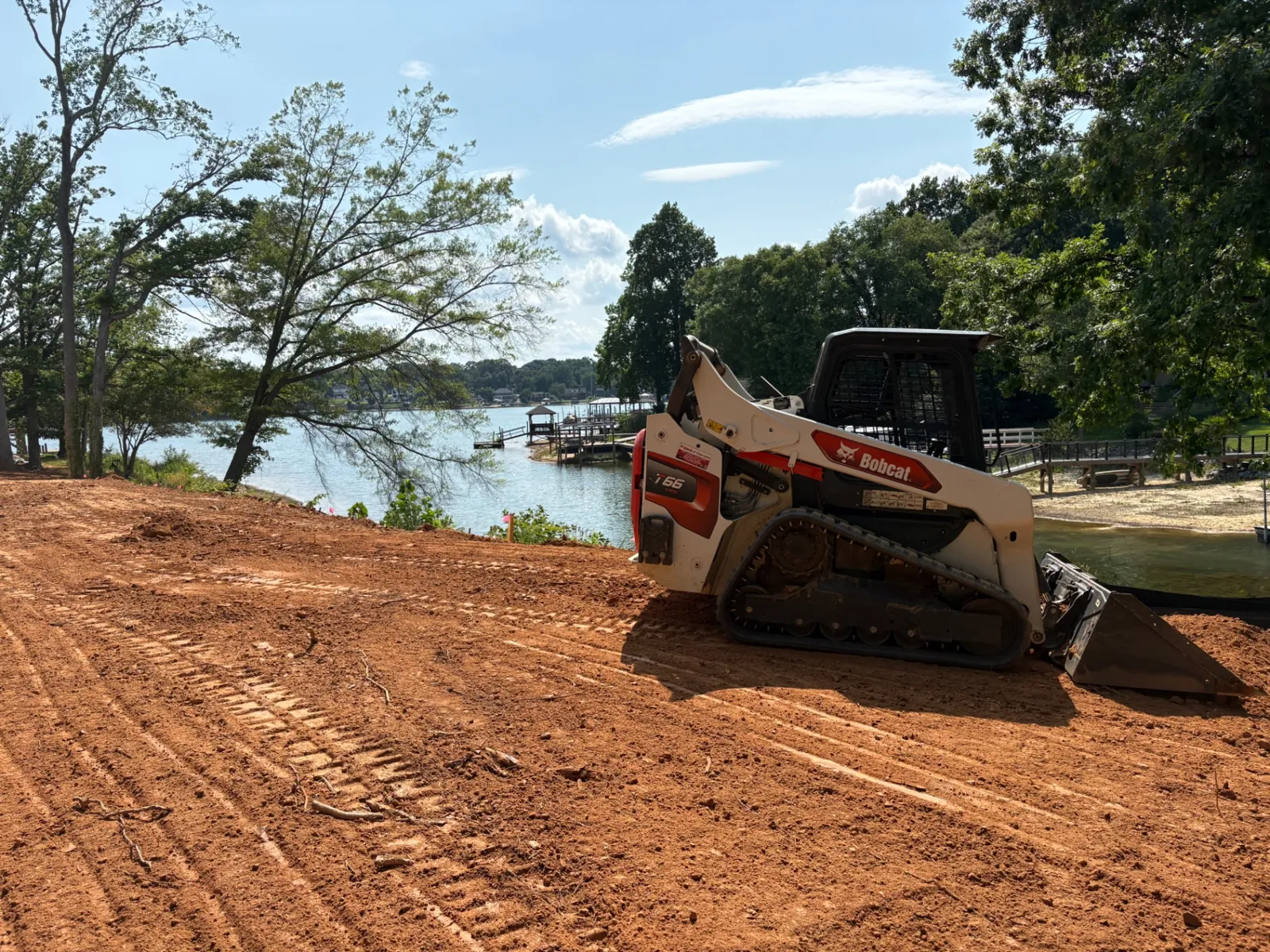
How much does land grading cost in North Carolina?
National cost guides put regrading an average backyard at $1,000 to $5,000. A small lawn runs $500 to $1,000 in one guide, and its national average sits near $2,300. A second guide puts the average cost to level a yard at $2,175. Most homeowners pay between $1,021 and $3,330, it says.
These are market numbers, not our price list. Size, slope and how much dirt has to move set where a job lands. A real price for land grading around Burlington starts with a look at the ground and where the water goes.
What does land grading cost by job?
The table pulls from two national cost guides. Most rows come from the first guide, and the fill rows show both.
| Grading job | Market range |
|---|---|
| Regrading one side of a house | $500 to $1,000 |
| Regrading around the whole house | $1,000 to $3,000 |
| Regrading an average backyard | $1,000 to $5,000 |
| Yard leveling, per square foot | $0.40 to $2.00 |
| Rough grading, per square foot | $1 to $2 |
| Finish grading, per square foot | $0.40 to $1.00 |
| Grading a quarter-acre home lot | $4,400 to $10,900 |
| Land grading, per acre | $17,400 to $43,600 |
| Grading company with a skid steer or mini excavator, per hour | $100 to $300 |
| Fill dirt, per cubic yard | $5 to $25 (second guide: $5 to $30) |
| Topsoil, per cubic yard | $10 to $50 (second guide: $12 to $55) |
The second guide lands close on the house. It puts regrading around a foundation at $1,000 to $3,000. It prices small and medium areas at $1 to $2 a square foot.
Rough grading cuts down slopes and shapes the land so it drains. Finish grading is the last smoothing pass before seed or sod. A job can need one or both, and the guide prices them apart.
What drives the price of land grading?
Size and slope. One guide says grading costs $500 to $5,000 on average. Yard size, soil type, slope and the fill dirt needed set the number. A steep slope takes more digging and more fill, it adds, and that raises the cost. The second guide agrees that larger yards and steeper slopes raise the total.
Cut and fill. Grading moves dirt from the high spots to the low ones. When the yard cannot supply enough, fill dirt comes in. The second guide says how much you buy depends on what can be moved from elsewhere in the yard.
Piedmont red clay. Burlington sits on Piedmont red clay. One guide lists soil type among the price factors and puts rocky soil at the high end of the range. Clay soaks up rain slowly, so a flat spot holds water. Clay also packs hard when it is worked wet, so a rainy stretch can push the start date.
Access. Machines need room to reach the ground. A fence, a shed or a narrow gate can slow the work. The second guide says clearing objects and debris out of the yard first will cut hourly labor costs.
Dirt hauled off or brought in. Many grading contractors charge separately for fill dirt and topsoil, the first guide says. Ask whether a quote includes the dirt, and where extra soil from the cut will go.
Drainage work. Some yards need more than a new slope. A shallow swale can carry runoff around the house. For a French drain, the first guide puts the cost at $10 to $35 per linear foot.
Clearing first. A wooded lot gets cleared before it gets graded. The first guide says clearing trees and large rocks before grading costs more. Our guide to land clearing cost per acre covers that side, and our land clearing page shows how the work runs.
What does it cost to grade a lot before you build?
A house lot is a bigger job than a backyard. The first guide puts leveling a quarter-acre home lot at $4,400 to $10,900. Its per-acre range, $17,400 to $43,600, covers bigger tracts.
On a new build, the work runs in order. Clearing opens the lot. Rough grading sets the house pad and the slope around it. The path for a gravel driveway can be shaped at the same time. Then footing excavation starts on the pad, and finish grading comes once the house is up.
Do you need a permit to grade land in North Carolina?
The state line is one acre. Under G.S. 113A-57, a job that will disturb more than one acre on a tract needs an erosion and sedimentation control plan. The plan is filed with the agency that has jurisdiction 30 or more days before the work starts. The agency has to approve it first.
Below that line, a town or county may still have grading rules of its own. The permit office for your address answers that question, and we point you there.
Digging brings one more state rule. G.S. 87-122 requires notice to the 811 center at least three full working days before digging starts. That notice expires 28 calendar days after the work start date.
How do you grade a yard that has a septic system?
Find the system first. The state’s septic fact sheet says to ask the local health department for a copy of the septic permit. Those forms should show the tank, the drain field and the repair area, and about where each one sits.
Then keep grading equipment off the septic tank, the drain field and the repair area. The repair area is the land the permit sets aside for a second drain field. The fact sheet says not to drive or park vehicles over the septic system. It also says state rules protect the repair area from soil disturbance, grading included.
We also do septic system installation, so we grade with the tank and drain field in mind. Building on a lot that needs a new system? Our guide to septic system cost in North Carolina covers that side.
How do you get a real number for your grading job?
Start with the problem. Note where water stands after a rain, how big the area is and whether the house is on septic. If the lot is wooded, say so.
Then get a written quote built on what the ground needs. We look at the job and put a free quote in writing. See how the work runs on our land grading page, or call or text (336) 516-7170.